Researching historic aviation accidents and locating crash sites in the Peak District & throughout the British Isles
Lockheed C-60A Lodestar 42-56014 of the 17th Ferrying Group, USAAF, flew into Beinn Nuis on the 30th September 1943
John R. MacKenzie
1st Lieutenant
Pilot
Killed
Richard H. Riddle
2nd Lieutenant
Co-pilot
Killed
William Silberg
Private
Radio Operator
Killed
John G. Johnson
Staff Sergeant
Engineer
Killed
Bernard T. Boone
Private 1st Class
Air Engineer
Killed
Louis C. Goldsmith
Major
Passenger
Killed
John M. Fantasky
Staff Sergeant
Passenger
Killed
The aircraft was on a transport flight from Prestwick on the Ayrshire coast to Stornaway in the Western Isles it had taken off at 09:49 GMT for the 1 hour 25 minute flight to Stornaway. The weather that day was cloudy with some rain, the cloud base was expected to be 1,500ft at the lowest.
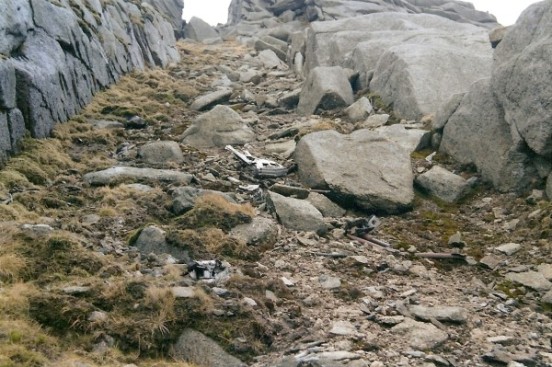
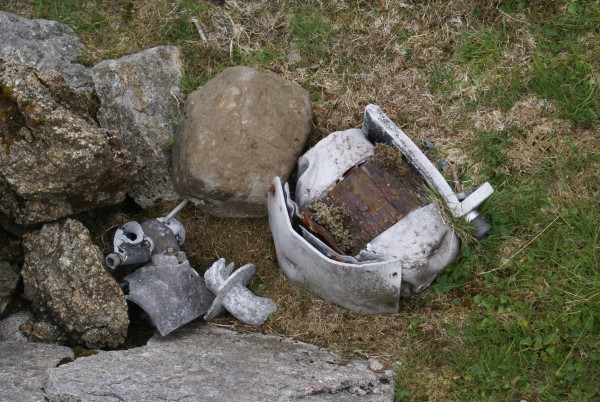
The photo above was taken close to where the aircraft impacted Beinn Nuis. All that remains today on the steep ground where the aircraft crashed are small fragments and a few larger pieces of wreckage.
When the aircraft failed to arrive at Stornaway and its crew could not be contacted a search was mounted, when the weather had improved 2 days later on the 2nd October the wreck was spotted close to the summit of Beinn Nuis on the Isle of Arran. It had flown into the eastern face of the mountain shortly after taking off from Prestwick, in much the same way as ATFERO Liberator AM261 had done north of Goat Fell two years earlier.
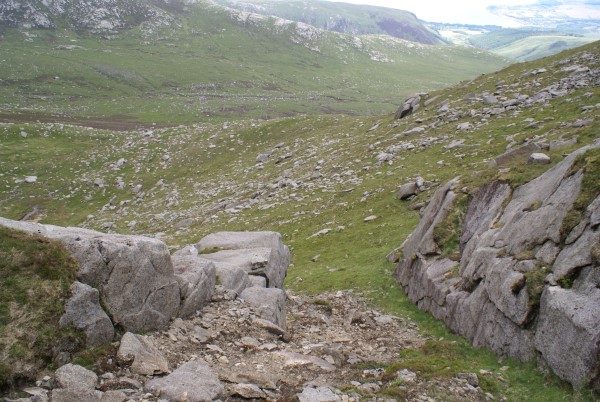
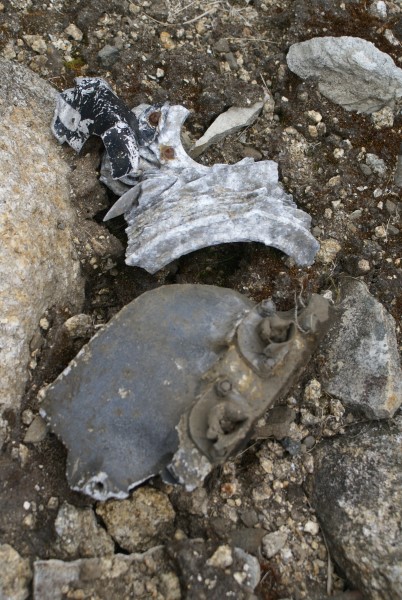
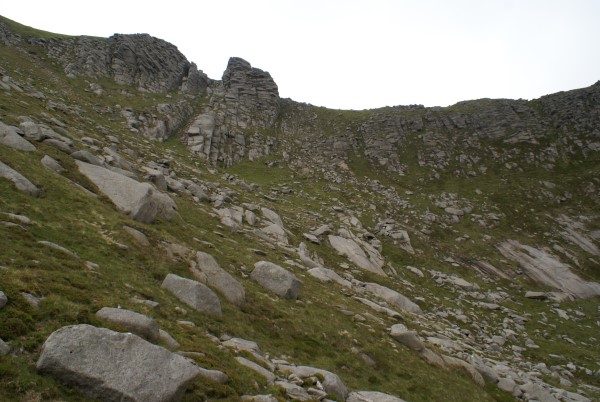
A view looking down from close to the point of impact in July 2018 showing one of the larger remaining pieces of wreckage. Much of the wreckage was as it had been when the previous visit was made in 2004.A 2018 view looking up the gully the aircraft crashed in.Looking down the gully which contains a large number of small items from the aircraft.Engine parts from the aircraft, the upper piece is part of a cylinder head and the lower part of the gearbox casing.Some of the structural parts of the aircraft which remain scattered down the mountain.Lower down the mountain are some collections of larger pieces of the aircraft, this being one of those collections.Further pieces on the lower slopes.A series of control wire pulleys below the crash site.This is part of an engine’s induction piping with heat shielding and brackets for exhaust gills attached.This is a lead counter-weight from one of the flying control surfaces of the aircraft.At first this looked like an electric motor or generator but appears to have been a large inductor used for suppressing electrical interference.Also in the lower part of the wreckage trail was this part, which when I found it I thought was the top of an aerial but have since found out is the remains of a 1 million candle power flame float.This photograph is taken looking across the slope towards the summit of Beinn Nuis, the crash site being in the gully which rises steeply to the right of the image.
The crash site of this aircraft is close to those of B-24 42-41030 which was lost a month prior and B-17 42-97286 which crashed in 1944.
The crash site is in the gully on the left hand side of the granite tower in this photograph which was taken while walking around the mountain towards the B-17 crash site.
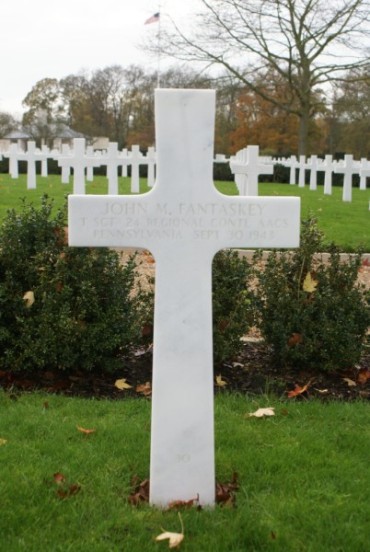
Four of the crew where laid to rest at Cambridge American Cemetery, they were: