Liberator G.R. Mk.V FL949 / PP-Y of No.311 (Czech) Squadron RAF, crashed on the Cuilags, Island of Hoy, Orkney on the 1st January 1945

| Oldrich Bures | Warrant Officer | Pilot | Killed |
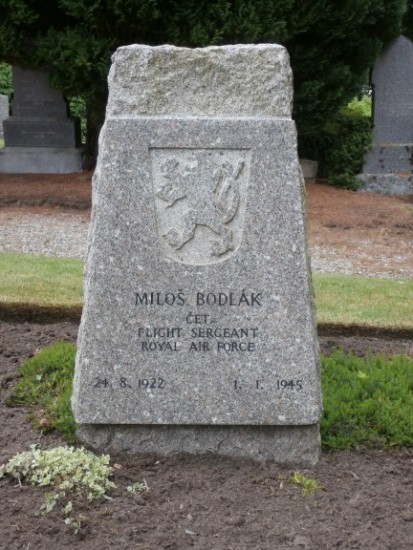
| Milos Bodlak | Flight Sergeant | Co-pilot | Killed |
| Otto Mandler | Flight Sergeant | Navigator | Killed |
| Zdenek Launer | Flight Sergeant | Flight Engineer | Killed |
| Ivo Karel Englander | Flight Sergeant | Wireless Operator / Air gunner | Killed |
| Martin Dorniak | Sergeant | Wireless Operator / Air gunner | Killed |
| Antoni Bednar | Flight Sergeant | Wireless Operator / Air gunner | Killed |
| Jaroslav Zapletal | Flight Sergeant | Wireless Operator / Air gunner | Killed |
The aircraft was returning to Wick, though the Squadron was stationed further down the coast at Tain, from an uneventful anti-submarine patrol in near arctic conditions, with low cloud, high winds and heavy snow, and clipped to hill about 100ft from the summit and was completely destroyed and all of the Czech crew were killed.
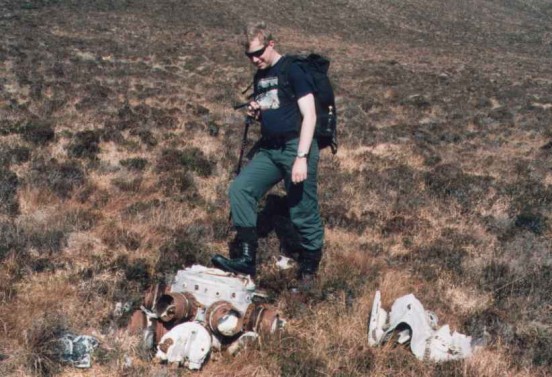
Much of the wreckage was eventually dragged to the bottom of the hill by the recovery crew from No.56 Maintenance Unit who spent 5 weeks on the Island. Their early work during the month of January had to be abandoned due to the ground being frozen and during February and March had to stop their work due to frequent snow and gales.

Thanks to Kevin Gray of the Tulsa Air and Space Museum for providing the photograph of the aircraft.


Following the crash all but one of the crew were buried at Tain Cemetery, Flight Sergeant Zapletal was buried at Berrynarbor churchyard in Devon. After the end of the conflict Flight Sergeants Launer and Mandler were repatriated to their native Czechoslovakia.