
Avro Lincoln B. Mk.2 RF511 of No.230 Operational Conversion Unit, crashed on Carnedd Llewelyn near Bethesda on the 15th March 1950

| John Talbot Lovell Shore MC AFC | Squadron Leader | Pilot | Killed |
| Cyril Alfred Lindsey | Flight Lieutenant | Navigator | Killed |
| Ronald Albert Forsdyke DFC | Engineer II | Flight Engineer | Killed |
| Harold Henry Charman | Signaller III | Radio Operator | Killed |
| Godfrey Leo Cundy | Gunner II | Air Gunner | Killed |
| Robert Henry Hutchings Wood | Gunner I | Air Gunner | Killed |
During the night of the 14th / 15th March 1950 a number of Lincolns took off on cross country exercise from RAF Hemswell and RAF Scampton, one of these aircraft was RF511 from No.230 Operational Conversion Unit, stationed at RAF Scampton. In the early hours of the 15th three of the aircraft were diverted by the Preston Area controller to land at RAF Valley on Anglesey as the weather had deteriorated at Scampton, two landed safely just before 03:00.
At 02:55 RAF Valley received a call from Bethesda Police Station stating that an aircraft had crashed nearby, 30 minutes later the RAF Mountain Rescue Team from Valley left for Bethesda. They travelled up to the waterworks in the lower reaches of Cwm Llafar where the team left their vehicles before continuing on foot. The first members of the rescue team reached to site at 05:20, they quickly confirmed that the crashed aircraft was RF511 and discovered four bodies as the fires reduced in size they located the remaining two airmen in the wreckage. All six bodies were recovered to Bethesda with help from staff at RAF Llanberis (a munitions storage depot) by 19:00.
The subsequent Court of Inquiry determined that the likely cause was the crew had turned onto a South-easterly course over Anglesey instead of the reciprocal out to sea.
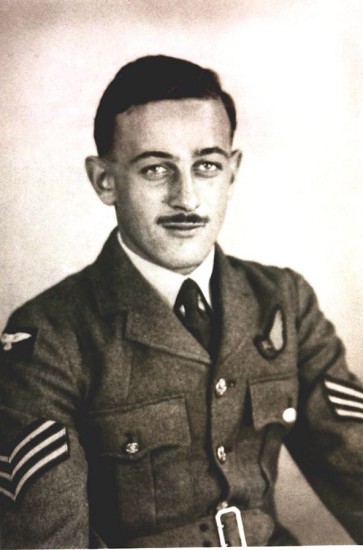
He was born in the Hulme area of Manchester in 1923 and joined the RAF in the late 1940s, having been in a reserved occupation as a farm labourer near Matlock during the war years, while two of his brothers were serving in the armed forces. One receiving a commission while with the Cheshire Regiment, later transferring to the RAF, before returning to the Army in 1945.
While in the RAF Godfrey had served in Cyprus and Palestine in ground trades before returning to the UK, after his death he was buried in a family grave at Huyton Parish Church, Liverpool.
Image Copyright & information: Mick Cundy

In between the rocks are hundreds of small pieces of the aircraft, towards the lower end of the scree slope are sections of both main undercarriage oleos.


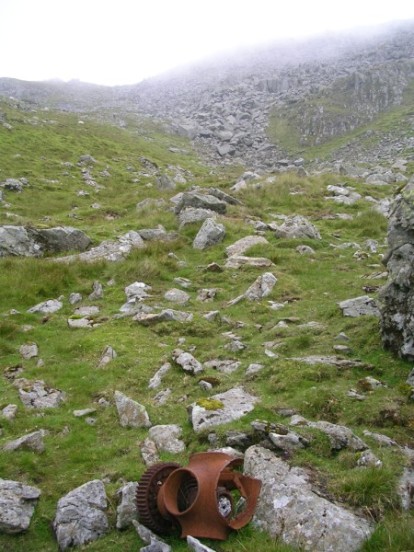
the impact point of the aircraft is in the scree towards the cloud base.
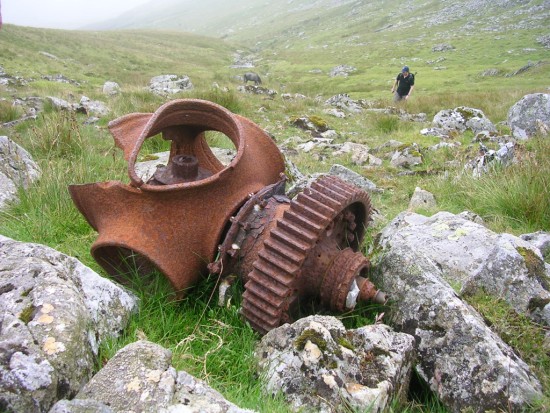


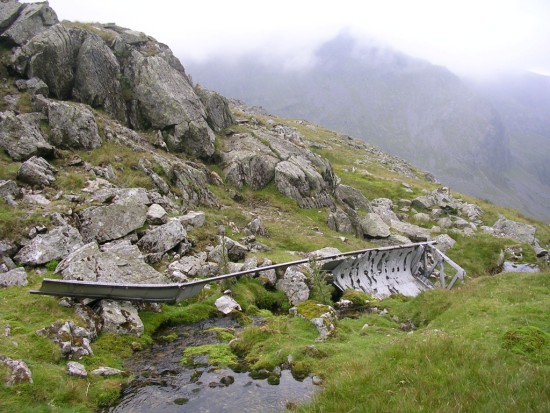


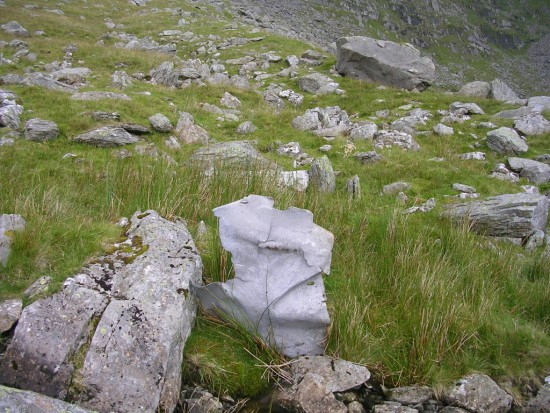


Two of the crew were buried at Holyhead Cemetery, they were Engineer II Forsdyke and Signaller III Charman.
It is interesting to note that Engineer II Forsdyke was a holder of the Distinguished Flying Cross, an award given to officers. During World War Two he had served in the RAF becoming a Flying Officer before leaving the service only to subsequently re-enlist. He had received his DFC during May 1945 while with No.405 Squadron, RCAF, a Pathfinder unit operating Avro Lancasters. His citation recorded that he had completed 50 operational sorties from mid 1944 as a Flight Engineer.


