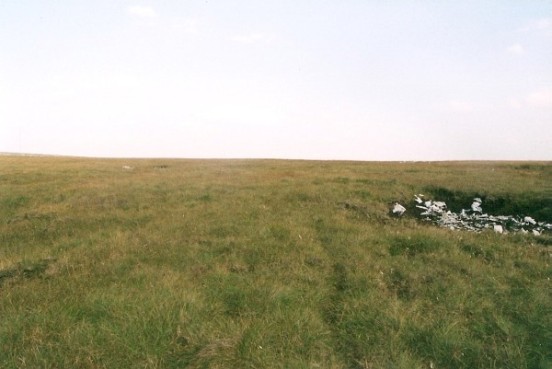
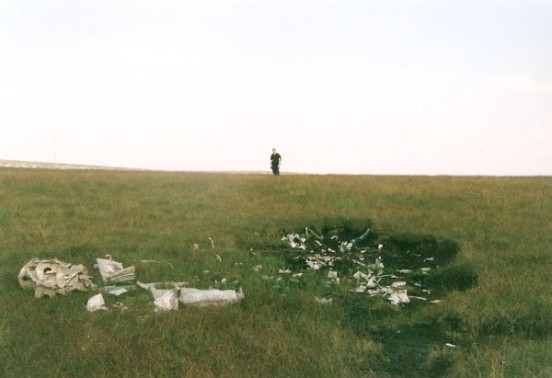
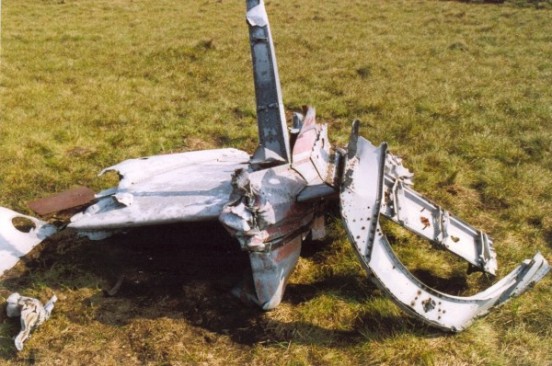
Gloster Meteors WA791 and VZ518 of No.66 Sqn RAF, crashed 12th April 1951 on Sliddens Moss while on a cine gun exercise from RAF Linton-on-Ouse near York

| Anthony Henry Hauxwell | Flying Officer | Pilot (VZ518) | Killed |
| David Merryweather Leach | Flight Lieutenant | Pilot (WA791) | Killed |
At 9:15am on Thursday 12th April 1951 a flight of four Meteor jet aircraft took off from RAF Linton-on-Ouse near York for a training flight. Flying the lead pair were Flight Lieutenant David Merryweather Leach (WA791) and Flying Officer Tony Hauxwell (VZ518). The flight was to climb to around 30,000ft where the two pairs would carry out attacks on each other. The weather forecast for the day was for complete cloud cover from 1,500ft to 20,000ft, on reaching 30,000ft the four aircraft were still in thick cloud and radioed Linton on Ouse to inform them that the flight would be returning home.
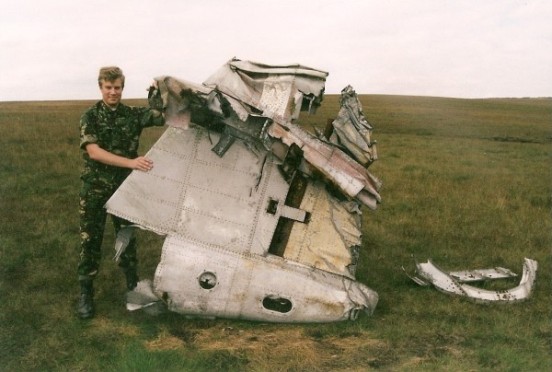
All four aircraft turned back towards Linton-on-Ouse after having descended back through 20,000ft Flt Lt Leach reported he could what he thought was Leeds through a break in the cloud and he and F/O Hauxwell were going to proceed down. The second pair could not see through the cloud and not being entirely sure of their position radioed their intention to remain at 20,000ft. After some 5 minutes the lead pilot of the second pair, Flying Officer Leslie Hayward, attempted to contact Flt Lt Leach with no success following this RAF Northern Radar at Lindholme near Doncaster attempted to contact the pair again with no success. Following this a search was mounted with wreckage being spotted latter in the day with a ground team reaching the seen the following afternoon.
The two aircraft had continued to descend through cloud and without ever breaking out of the bottom of the overcast had flown into the top of the moor on Sliddens Moss to the North of the Longdendale valley in formation. The marks left by the two aircraft are still clearly visible. There was not as some have suggested a mid-air collision.