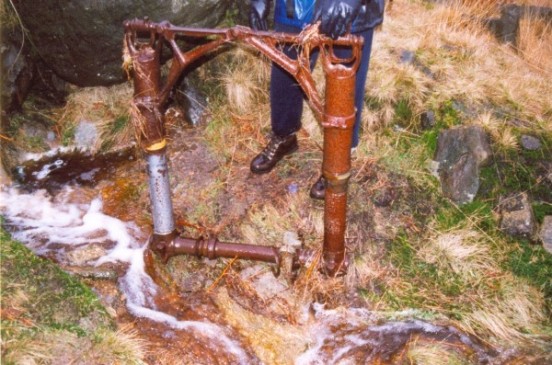
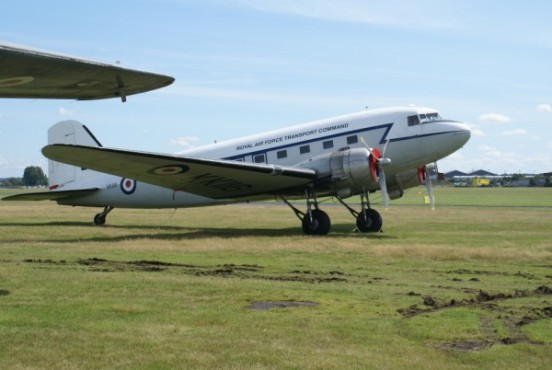
Douglas DC-3 Dakota G-AHCY of British European Airways, crashed at Wimberry Stones on the 19th August 1949
| Frank Wortley Pinkerton | Captain | Pilot | Killed |
| Gordon Holt | First officer | Co-pilot | Killed |
| Richard Willis Haigh | Radio Officer | Radio Operator | Killed |
| Robert F. Ashton | Mr | Passenger | Injured |
| Willie Ashton | Mr | Passenger | Killed |
| Sarah Margeurite Baird | Mrs | Passenger | Killed |
| Elsie Holt Barclay | Mrs | Passenger | Killed |
| Joan Minnie Barclay | Miss | Passenger | Killed |
| Cyril Beanstock | Mr | Passenger | Killed |
| Dorothy May Brimelow | Miss | Passenger | Killed |
| Derek Harry Clarke | Mr | Passenger | Killed |
| Margery Davis | Mrs | Passenger | Killed |
| Horace Evans | Mr | Passenger | Injured |
| Ruth Evans | Mrs | Passenger | Injured |
| Stephen Evans | Master | Passenger | Injured |
| Roger Alan Evans | Master | Passenger | Killed |
| Bridget Anne Farrell | Miss | Passenger | Killed |
| George Stephen Gisby | Mr | Passenger | Killed |
| Ivy Gwendolen Jones | Miss | Passenger | Killed |
| Hubert Stanley Lea | Mr | Passenger | Killed |
| Kathleen McMahon | Miss | Passenger | Injured |
| Henry Brice Prestwich | Mr | Passenger | Killed |
| Joan Prestwich | Mrs | Passenger | Killed |
| Elizabeth Anne Prestwich | Miss | Passenger | Killed |
| Jane Caroline Prestwich | Miss | Passenger | Killed |
| Michael Prestwich | Master | Passenger | Injured |
| Elizabeth Schofield | Mrs | Passenger | Killed |
| Beatrice Elizabeth Sydall | Mrs | Passenger | Killed |
| Arthur Frank Vickery | Mr | Passenger | Injured |
| Edna Vickery | Mrs | Passenger | Killed |
| David Vickery | Master | Passenger | Killed |
| Christopher Watt | Mr | Passenger | Injured |
The aircraft had been built for the RAF and carried the serial number KG348, it had also been issued with a USAAF serial when it was built, this was 42-92543. It completed 1,256 flying hours with the RAF before being sold in early 1946. It was then overhauled by the Scottish Motor Traction Company and was placed onto the civilian register on the 3rd September 1946, 6 days later the aircraft was transferred to its new owner British European Airways as an airliner.
The crew were all experienced, Captain Pinkerton had flown a total of 4,201 hours during both his civilian career and earlier RAF service, having received his commission as a Pilot Officer in October 1944 and became a Flying Officer during 1945. He had flown into Ringway some 88 times in the two years before the accident.
On the 19th August 1949 G-AHCY was being used for a scheduled flight from Nutts Corner, Belfast, to Ringway, Manchester. The aircraft left Nutts Corner at 11:58 BST for what should have been an 80 minutes flight to Ringway, most of this flight was under Instrument Flight Rules due to cloud cover. As with wartime flights navigation was aided by radio navigation with the crew utilising their GEE receiver to gain a position fix while off Blackpool at 12:40 and subsequently D/F fixes from the ground stations at Squires Gate and Ringway.
The co-pilot, First Officer Holt, was acting as navigator during the flight and recorded their positions and other notes in the navigation log. This was found in the wreckage and was the only useful item from onboard the aircraft to aid the investigation and subsequent Court of Inquiry.
At 12:45 1st Off. Holt noted a change of course by 7o to starboard as they were north of their intended track, however the Court of Inquiry concluded that this change of course was not made as at the time the pilot reported crossing the Standard Beam Approach radio beam the aircraft was some 11 nautical miles NE of where it should have crossed the beam, just to the NE of the airfield, if the course change had been made.
At 12:49 the pilot contacted the duty controller at Ringway to state that they were “Approaching from NW at 3,500 feet, descending to 1,500 flying under IFR, ETA 1157”, the time was recorded as GMT. When the aircraft passed through the radio beam the pilot turned to fly along the beam before making a procedure turn to turn the aircraft through 180 degrees and end up flying back down the beam towards Ringway.
It was while making this turn around 13:02 that the aircraft flew into high ground near Wimberry Stones. The aircraft was flying with the under carriage lowered in preparation for landing but was further east than it should have been.
The normal procedure for landing at Ringway in IFR conditions was that the aircraft should over-fly the ‘cone of silence’ in the radio beam that was directly overhead the transmitter station on the airfield but this was not done and was considered to be one of the three factors that caused the accident.